
Iways Projects
Thompson Pass Smart Snowplow & Snow Blower
Mike Coffey, Statewide Maintenance Engineer, ADOT&PF
Alaska's severe winter weather conditions and the lengthy winter nights can produce some of the most hazardous driving conditions in America. This combination can reduce visibility to the point where the efficiency of snow removal operations is greatly affected and can result in collateral damage to infrastructure (i.e. guardrails, signs, milepost markers, equipment, etc.) as well as increase the likelihood of collision with other vehicles. As the efficiency of snow clearing operations declines there is a corresponding deterioration of driving conditions, which can ultimately result in the closure of highways. Highway closures affect the public's ability to access essential services, prevent public safety agencies from responding to emergencies, and result in substantial economic impact to the affected communities.
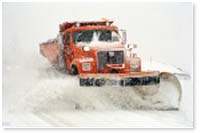
Thompson Pass Smart Snowplow
Advanced Technology Applied to a snow blower/snowplow:
The Smart Snowblower/Snowplow
is a snow blower and/or a snowplow outfitted with
sophisticated instruments to keep the driver in
the lane. The main purpose is to avoid other vehicles
and obstacles such as guardrail during low visibility
caused from blowing snow, fog and darkness.
The vehicle-mounted portion of the system combines
a recent advancement in Differential Global Positioning
System (DGPS), called Real Time Kinematics (RTK),
and collision avoidance technology. The supporting
infrastructure includes a base station and additional
signal repeaters to extend coverage to more than
20 miles of highway. The system relies on a highway
model that is generated using Geographic Information
System (GIS) based survey methods that depicts the
entire infrastructure, hazards, and the highway
alignment within the right of way for this segment
of the highway.
Vehicle positioning, collision avoidance, and the
driver interface constitute the primary components
of the Smart Snow blower/Snowplow. Vehicle positioning
is accomplished through a combination of a DGPS
- geo-spatial database. Collision warning and avoidance
is accomplished with radar sensors and signal processing
techniques, which take advantage of information
returned by the vehicle positioning system. Finally,
information is provided to the driver via the driver
interface system, which will employ graphical, haptic,
and auditory interfaces (or any combination thereof
as deemed appropriate by the human factors work)
to provide an optimal information path to the driver.
The project has been successfully deployed and is operational in Thompson Pass and Valdez on the Richardson Highway. This site was chosen
because of the severe environmental conditions (over
450" of snowfall annually) that are common
to this portion of the Richardson Highway during
the winter months.
Smart Snowblower Benefits:
- Reduction in accidents
- Improve response time to incidents
- Allow snow blower operators to keep roads open and reopen sooner if closed
- Improve safety for the traveling public and operators
- Reduce driver stress
Contact
Robert Dunning
Valdez District Superintendent
 (907) 834-1039
 robert.dunning@alaska.gov
Page last updated: 5/25/2018
Questions about the Iways program or website?
Isvan Gomez, ITS Coordinator/511 Manager
dot.iways@alaska.gov
907-451-2959
Iways Information
- About Iways
- Projects
- Iways Architecture
- Implementation Plans
- Real-Time Systems Information
- Road Weather Info
- State Chapter
- Systems Engineering
- Links
- Strategic Investment Section

PLEASE NOTE: Adobe Acrobat PDF files require a free viewer available directly from Adobe.